Individual planning
Care plans, behaviour support plans and risk assessments evolve with each child or young person’s journey, strengths, risks and needs.
 Make a referral
 What we do
Specialist solo residential homes for children and young people aged 6 to 18 with complex needs and high-risk behaviours, delivered by carefully selected, trained teams who stay present when care becomes difficult.
See inside our homes →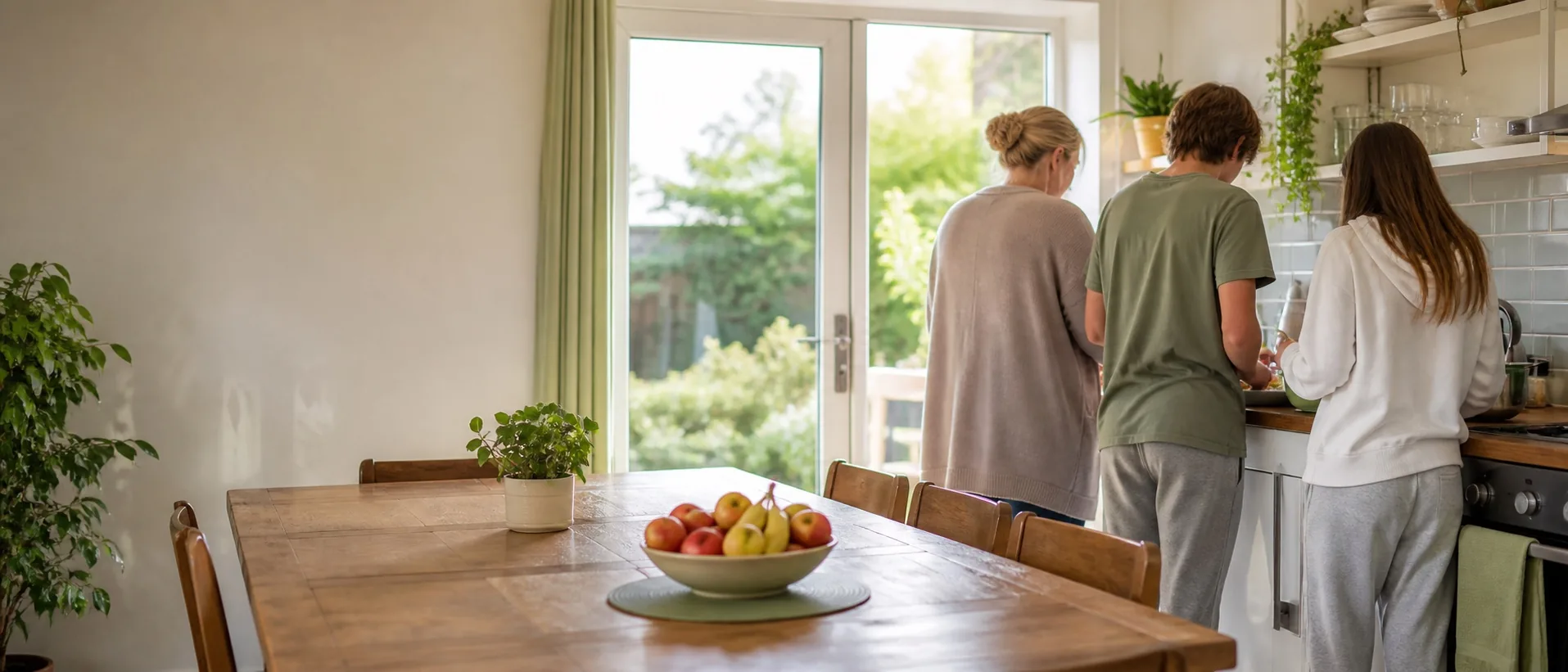
We provide intensive, person-centred support for children and young people who may have experienced trauma, instability, neglect, abuse or rejection. Behaviour can communicate unmet needs. Our role is to stay curious, keep them safe and create the consistency needed for trust and progress. We do not reduce a child or young person to their most difficult day.
Care plans, behaviour support plans and risk assessments evolve with each child or young person’s journey, strengths, risks and needs.
We use robust safer recruitment, values-led selection and careful vetting, then provide role-specific training, supervision and ongoing development.
Purposeful activities, hobbies, exercise, cooking, education and new experiences build confidence, routine, connection and positive memories.
Consistent adults build trust through calm, boundaried and compassionate care that continues through difficult moments.
We prioritise education and help children and young people practise the everyday skills, choices and self-belief they need for the future.
We communicate openly with local authorities and the wider professional network so decisions remain joined up and child-centred.
Activity-based care
We build purposeful activity into everyday care: education, sports and exercise, cooking, creative interests, outdoor experiences, community participation, life skills and opportunities to try something new. Activities are chosen around the individual—not used as a one-size-fits-all timetable—and help create structure, achievement, connection and positive memories.
Specialist high-risk support
We specialise in supporting children and young people whose risks, experiences or behaviours may have led to instability or previous placement breakdowns. Our solo-home model allows staffing, the environment, routines, activity and risk planning to be built around one individual.
Bright Futures can accept appropriate placements for children and young people who are subject to a court-authorised deprivation of liberty order. Every placement is assessed individually to confirm that the home, staffing arrangements and care plan can safely meet the child or young person’s needs.
Where a placement is accepted, our trained staff implement and uphold the authorised arrangements—including any defined supervision or restrictions—in accordance with the specific court order, the law and the agreed multi-agency plan. Restrictions must remain lawful, necessary and proportionate, with the child or young person’s welfare, rights and voice kept central.
Every referral is considered individually. We assess registration, current risk, staffing, the home environment, professional information and whether we can safely meet the child or young person’s needs.
Our frontline test
That question applies to the team we select and train, the bedroom prepared for a first night, the way a boundary is explained, the cleanliness of the home, the accuracy of a record and the support given after a difficult incident.
Where we work
We accept referrals from local authorities across the UK. Where a child or young person’s plan requires it, we can manage family and professional contact arrangements across the UK and arrange collection or transport from any UK location, subject to risk assessment and agreement with the placing authority.
Staffing shaped around need
Our solo homes operate with a minimum staffing level of 2:1. Where a child or young person’s assessed needs, risks, care plan or authorised arrangements require additional support, staffing can be increased above 2:1.
The appropriate level is considered through referral assessment, risk assessment and multi-agency planning, then kept under review as needs and circumstances change. The purpose is always to provide enough skilled, consistent adults to deliver safe, individualised care.
Placement enquiries